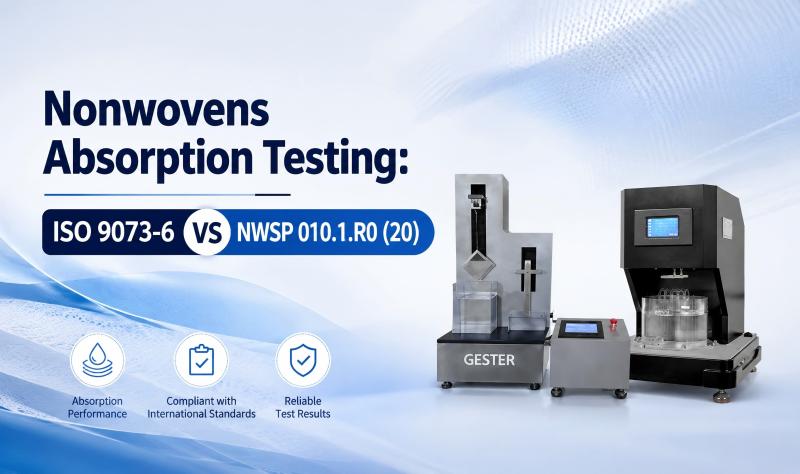
Tests d'absorption des non-tissés :
ISO 9073-6 VS NWSP 010.1.R0 (20)
Si vous voulez savoir à quelle vitesse une lingette jetable peut absorber un liquide renversé, quelle quantité de liquide un pansement médical peut contenir sans fuite, ou à quelle vitesse un liquide se répand sur un tissu non tissé en utilisation pratique, alors vous devez opter pour le test d'absorption des non-tissés.
Un non-tissé hygiénique à absorption rapide et à forte capacité d'absorption est parfaitement adapté aux besoins quotidiens. Les acheteurs et les fabricants de non-tissés accordent une grande importance à ce test afin de garantir la capacité du tissu à résister à l'exposition aux liquides en conditions réelles d'utilisation.
Quel est le rôle du testeur d'absorption des non-tissés pour obtenir des résultats cohérents ?
Le testeur d'absorption d'eau pour non-tissés simule des scénarios de contact avec des liquides réels et fonctionne selon des paramètres standard définis par des organisations internationales telles que l'ISO et l'EDANA.
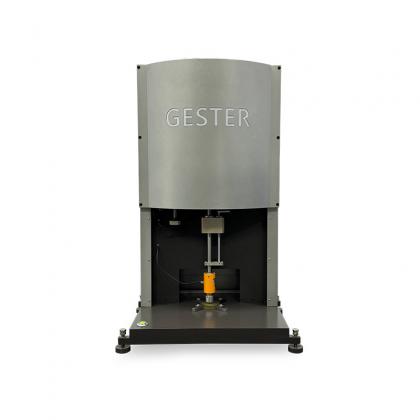
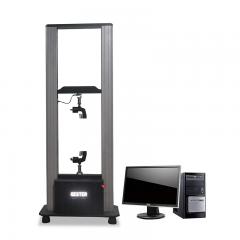
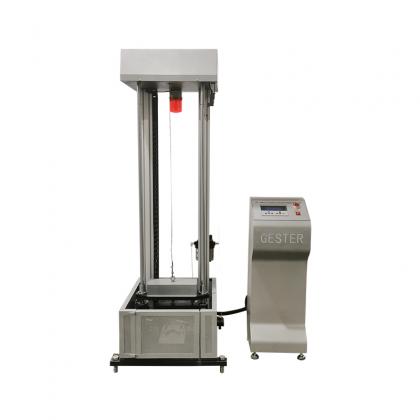
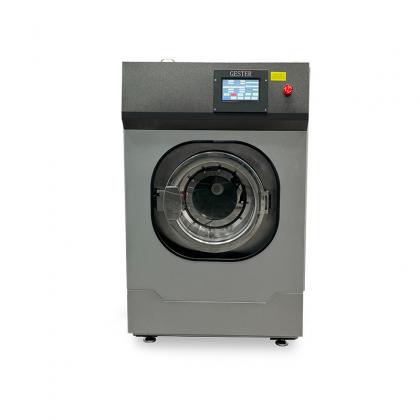
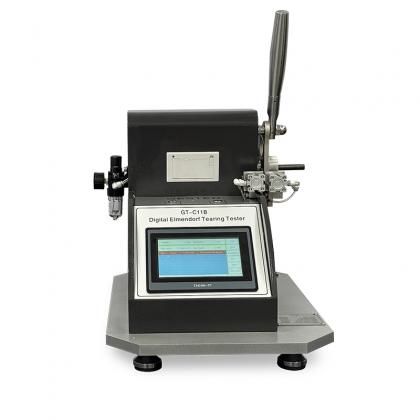
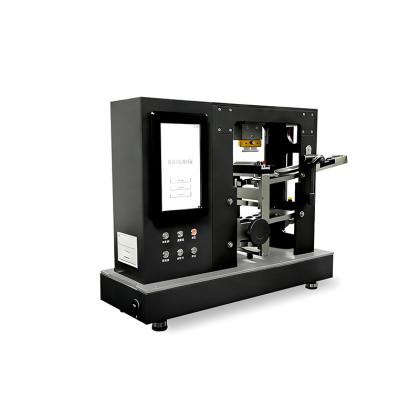
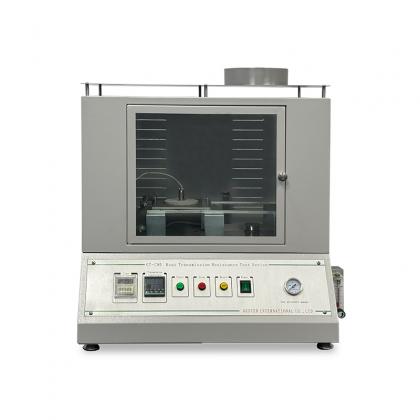
GESTER'sTesteur automatique d'absorption des non-tissés GT-CN26etTesteur d'absorption pour non-tissés GT-CN02Les deux systèmes adoptent des capteurs de haute précision et des programmes de contrôle automatisés, ce qui permet à l'opérateur d'obtenir des résultats de test précis et reproductibles.
Est-il indispensable de réaliser des tests normalisés pour l'absorption des non-tissés ?
Pour effectuer des tests standardisés, nous disposons de deux normes largement reconnues, ISO 9073-6 et NWSP 010.1.R0 (20), qui assurent la cohérence lorsqu'elles sont effectuées dans différents laboratoires.
Ces deux normes sont reconnues internationalement et fournissent des informations complètes sur les procédures d'essai, notamment la préparation des échantillons, les conditions d'essai, les étapes de fonctionnement et les méthodes de calcul des résultats.
En réalité, ces normes aident aussi les fabricants, car s'ils doivent fabriquer un produit capable de répondre à une exigence spécifique de temps ou de capacité d'absorption, cela signifie qu'après une production de qualité, leur produit répondra à cet indice dans les laboratoires de chaque pays.
Les acheteurs de non-tissés achètent le produit en toute confiance après avoir consulté les résultats des tests d'absorption normalisés. Ainsi, les tests normalisés éliminent les approximations et fournissent des données fiables.
ISO 9073-6
L’Organisation internationale de normalisation (ISO) fournit des méthodes d’essai normalisées pour mesurer les propriétés d’absorption de liquide des tissus non tissés selon la norme ISO 9073-6.
La norme ISO 9073-6 définit précisément des méthodes d'essai normalisées pour déterminer les performances d'absorption des non-tissés. C'est pourquoi elle constitue l'un des meilleurs choix pour évaluer la capacité des matériaux non tissés à gérer les liquides.
Conformité des équipements
Les testeurs d'absorption automatique de non-tissés GESTER GT-CN26 et GT-CN02 réalisent les tests en stricte conformité avec les exigences des normes, grâce à des capteurs de précision et des systèmes de contrôle automatisés. Seul un testeur de temps d'absorption de liquide conforme aux normes peut répondre aux exigences de la norme ISO 9073-6 et fournir des résultats précis en matière de performance d'absorption.
Paramètres de test et évaluation des résultats
Lorsque l'échantillon non tissé est testé selon la norme ISO 9073-6, il subit un contact liquide normalisé, ce qui produit des indicateurs quantifiables, notamment le temps d'absorption, la capacité d'absorption et le taux de capillarité.
Ces indicateurs permettent d'établir une évaluation objective des performances, par comparaison avec les exigences du cahier des charges du produit. Après le test, les données obtenues sur l'échantillon sont comparées à la norme ou à l'indice de référence du produit afin de déterminer sa conformité.
Les performances d'absorption de l'échantillon non tissé sont évaluées par des valeurs quantitatives. Plus le temps d'absorption est court, plus la vitesse d'absorption du liquide est élevée ; plus la capacité d'absorption est importante, plus le matériau peut contenir de liquide ; plus la vitesse d'imprégnation est rapide, meilleures sont les performances d'étalement du liquide.
L'autre avantage des tests d'absorption des non-tissés selon la norme ISO 9073-6 est que nous obtenons des résultats cohérents qui peuvent être vérifiés par d'autres laboratoires.
Les résultats normalisés des tests d'absorption instaurent un climat de confiance entre le fabricant et les acheteurs.
Applications de la norme ISO 9073-6
Produits d'hygiène, pansements médicaux, lingettes humides, matériaux de filtration, non-tissés industriels : autant de secteurs où les matériaux sont testés selon la norme ISO 9073-6 afin de garantir leur performance d'absorption des liquides. Pour ces tests, les appareils de test d'absorption d'eau pour non-tissés de GESTER constituent la solution idéale pour une réalisation conforme à la procédure standard.
NWSP 010.1.R0 (20)
Principe de test
La norme NWSP 010.1.R0 (20) est également connue sous le nom de méthode d'essai des pratiques standard des non-tissés pour les propriétés d'absorption de liquide, largement reconnue par l'industrie mondiale des non-tissés et les associations industrielles connexes.
Le testeur de temps d'absorption des liquides fonctionne également en plaçant l'échantillon de tissu dans des conditions de contact liquide standardisées et en mesurant les indicateurs d'absorption correspondants selon des procédures spécifiées.
Après le test d'absorption, le technicien examine les données du test et donne un avis sur les performances selon les méthodes de calcul standard.
Dans la norme NWSP 010.1.R0 (20), nous examinons les propriétés d'absorption de base, notamment le temps d'absorption du liquide et la capacité d'absorption du liquide, ainsi que les performances de capillarité du liquide dans les scénarios de test correspondants.
Elle suit également des procédures normalisées de préparation et d'essai des échantillons, telles que la norme ISO 9073-6, afin de simuler plus fidèlement les conditions d'utilisation réelles. La norme NWSP 010.1.R0 (20) s'applique généralement à différents types de tissus non tissés, en fonction de leur grammage et de leur application.
Équipement et configuration
La norme NWSP 010.1.R0 (20) couvre les essais de temps d'absorption et de capacité d'absorption, et exige des appareils de mesure et de pesage précis. Dans cet essai, l'objectif principal est de suivre le processus d'absorption du liquide et d'enregistrer des données quantitatives précises.
C’est pourquoi les testeurs d’absorption automatique de non-tissés GESTER GT-CN26 et GT-CN02 répondent tous deux aux exigences de cette norme.
Si on la compare à l'ISO 9073-6, qui comporte des divisions de section claires pour différents éléments de test, la NWSP 010.1.R0 (20) intègre davantage de scénarios de test dans une seule spécification standard et est plus flexible pour l'inspection de la qualité en usine.
Lors de ce test, le technicien utilise l'appareil de mesure du temps d'absorption des liquides via l'interface tactile, paramétrise le test selon les exigences standard et lance le test d'une simple pression sur un bouton. L'appareil effectue automatiquement le test et enregistre les données.
Pour la norme NWSP 010.1.R0 (20), nous utilisons de l'eau pure ou le liquide d'essai spécifié, selon les besoins. Une fois l'essai terminé, nous calculons les résultats selon la formule normalisée et les comparons aux spécifications du produit.
Rôle du testeur d'absorption des non-tissés selon la norme NWSP 010.1.R0 (20)
Le test de temps d'absorption exige une grande précision de chronométrage et un mouvement de chute stable de l'échantillon, tandis que le test de capacité d'absorption exige une pesée précise et un temps d'immersion standardisé.
Les testeurs d'absorption automatique de non-tissés GESTER GT-CN26 et GT-CN02 permettent de passer d'un type de test à l'autre par de simples commandes tactiles. Ces testeurs d'absorption d'eau pour non-tissés assurent un contrôle précis des procédures de test et garantissent des conditions de test stables tout au long du processus.
Ils disposent d'un système automatisé permettant de surveiller l'état des tests et d'enregistrer automatiquement les données une fois les étapes de test prédéfinies terminées.
Comparaison entre la norme ISO 9073‑6 et la norme NWSP 010.1.R0 (20)
Similitudes dans les principes des essais d'absorption
Les deux normes évaluent les performances de manipulation des liquides des non-tissés en mettant des échantillons en contact avec le liquide d'essai dans des conditions de laboratoire bien définies.
Les deux normes mesurent trois attributs clés : le temps d’absorption du liquide, la capacité d’absorption du liquide et le taux d’évacuation du liquide par capillarité.
Les deux normes exigent un préconditionnement des échantillons et utilisent des résultats numériques pour les rapports d'essais. Les résultats des essais, conformes aux deux normes, guident les fabricants et les acheteurs dans la vérification de la qualité des produits non tissés destinés à l'hygiène, au secteur médical et à l'industrie.
Principales différences dans les systèmes de préparation, d'évaluation et de classification des spécimens
La norme ISO 9073-6 comprend trois sections indépendantes. La section 4 spécifie la procédure d'essai d'absorption d'un liquide en fonction du temps ; la section 5 définit l'essai de capacité d'absorption d'un liquide ; la section 6 traite de l'essai de vitesse de migration capillaire d'un liquide. Chaque section comporte des instructions spécifiques pour la préparation des échantillons.
La norme NWSP 010.1.R0 (20) intègre ces trois éléments de performance d'absorption dans un seul document normatif. Elle présente de légères différences par rapport à la norme ISO 9073-6 concernant la quantité d'échantillon, les paramètres de temps de drainage et la formule de calcul.
La norme ISO 9073‑6 est largement adoptée comme norme de référence ISO mondiale. La norme NWSP 010.1.R0 (20) est largement utilisée pour le commerce des produits non tissés sur les marchés nord-américains.
Les deux normes produisent des résultats de test numériques plutôt que des échelles de notation subjectives. Les opérateurs obtiennent le temps d'absorption en secondes, la capacité d'absorption en pourcentage et la valeur du taux de capillarité. La norme NWSP 010.1.R0 (20) met davantage l'accent sur la praticabilité de la méthode de test pour les flux de travail de contrôle de la qualité des non-tissés industriels.
Les testeurs d'absorption automatiques de non-tissés GESTER GT‑CN26 et GT‑CN02 répondent conjointement aux exigences de test des normes ISO 9073‑6 et NWSP 010.1.R0 (20).
Le testeur automatique d'absorption de non-tissés GT-CN26 couvre le test d'absorption de liquide en fonction du temps selon la norme ISO 9073-6, section 4, et les éléments d'absorption en fonction du temps correspondants de la norme NWSP 010.1.R0 (20). Il prend en charge le mouvement de chute libre simulé d'un panier métallique, l'observation d'un réservoir d'eau transparent, un capteur de haute précision, des menus à écran tactile et une imprimante thermique intégrée.
Le testeur d'absorption des non-tissés GT-CN02 répond aux exigences de la norme ISO 9073-6, section 5 (capacité d'absorption des liquides), section 6 (taux de capillarité des liquides) et aux exigences de la norme NWSP 010.1.R0 (20). Il est équipé d'un écran tactile et d'une mini-imprimante intégrée pour l'impression directe des données.
Pour plus d'informations surtests d'absorption des non-tissésPour toute question concernant les normes ou les exigences relatives aux équipements de test d'absorption des non-tissés, n'hésitez pas à nous contacter !
‑ Tél : +86-595-28886108
— Courriel : marketing@gester-instruments.com



 français